

The art and science of myofascial cupping
Myofascial cupping is a sophisticated therapeutic technique with deep roots in traditional Chinese medicine and acupuncture. Today, it has evolved into a modern, non-invasive treatment that bridges the gap between ancient healing traditions and contemporary manual therapy. By combining the principles of suction with myofascial release, this treatment offers a unique way to address pain and restricted movement.
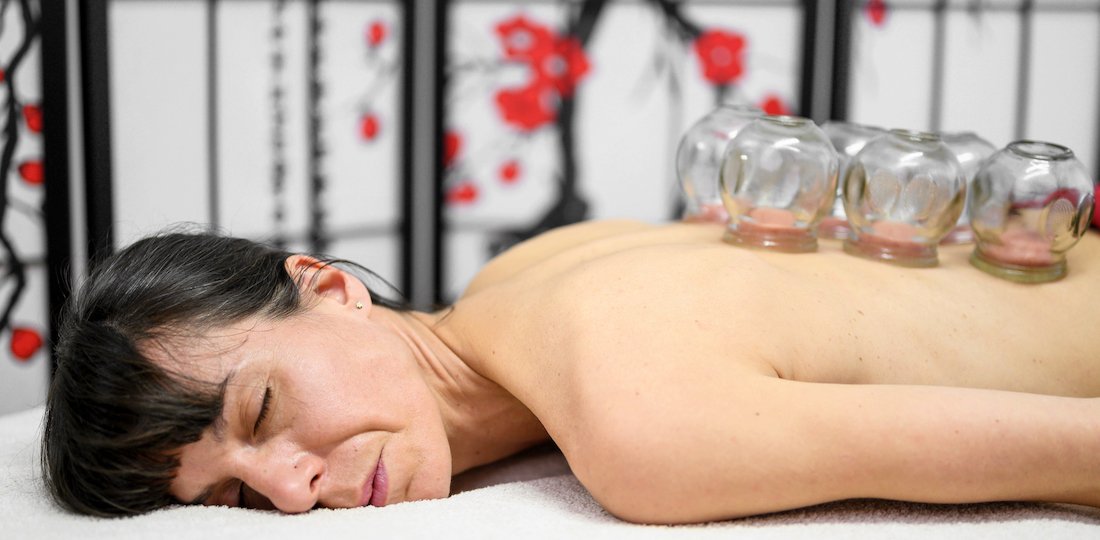
How the Vacuum Effect Works
Unlike traditional massage, which applies downward pressure to the muscles, myofascial cupping uses “negative pressure.” By placing specialized medical-grade cups on the skin to create a vacuum, the treatment provides gentle traction to the skin and the underlying fascia—the dense connective tissue that surrounds your muscles.
This lifting action creates space between the layers of tissue, which provides several key benefits:
- Enhanced Microcirculation: The vacuum draws fresh, oxygenated blood into the area, accelerating the body’s natural healing response.
- Lymphatic Drainage: It assists in moving metabolic waste products out of the muscle tissue.
- Fascial Decompression: It breaks up adhesions or “knots” in the fascia that can cause stiffness and restricted range of motion.
A Dynamic Approach to Healing
What sets myofascial cupping apart from traditional static cupping is its dynamic application. While traditional methods often involve leaving the cups in one place, our therapists utilize a more active approach:
- Gliding Techniques: We may move the cups across the skin while maintaining suction to provide a deep, sweeping myofascial release.
- Functional Movement: We often pair the suction with active range-of-motion exercises. By moving the limb while the cup is attached, we can target specific areas of tension during the exact movement that causes you discomfort.
This integrated approach ensures a more prolonged treatment effect, helping to significantly reduce muscle tension, improve flexibility, and restore fluid, pain-free movement.