

Regain your balance and reduce dizziness with expert vestibular therapy
Vertigo and Dizziness are some of the most common complaints seen by Medical Doctors. Vertigo is the sensation of the world spinning around; dizziness is the sensation of being off-balance and “lightheaded”. While some reasons for such symptoms certainly require medical treatment, some common conditions can greatly benefit from physiotherapy intervention.
Benign Paroxysmal Positional Vertigo (BPPV) results from calcium crystals (otoconia) displacement from their usual location in the vestibular system. These crystals migrate into one or more semi-circular inner ear canals where they are not supposed to be. When the head moves into a certain position, the crystals move and trigger nerves in the semi-circular canal – this can cause the sensation of vertigo, nausea and involuntary eye movements (nystagmus). Patients will complain of vertigo being provoked by looking up or down, lying down too quickly and especially turning over in bed. Vertigo may be extreme but usually goes away in less than 60 seconds.
Physiotherapist assessment of BPPV will include history taking and screening questions to confirm the diagnosis and rule out a different neurological lesion. The Physiotherapist will then perform Dix-Hallpike and Head Roll tests to identify the involved semi circular canals. Based on the findings, the physiotherapist will perform a manoeuvre to reposition the crystals in the proper place (the most common is Epley manoeuvre). The manoeuvre is brief and generally well tolerated. Canalith repositioning is reported to be highly effective, although some people need more than one treatment.
Vestibular rehabilitation focuses on reduction of symptoms of peripheral vestibular dysfunction such as dizziness, gaze disturbances and balance impairments. Chronic vestibular lesions can occur due to number of conditions including Vestibular Neuritis, Meniere’s disease and degeneration. The Physiotherapist will design and monitor a special exercise program to reduce symptoms associated with vestibular dysfunction. The exercises will include gaze stabilization exercises, habituation exercises (motion sensitivity reduction), static and dynamic balance exercises, and functional training. The treatment is available in all our clinics, also serving Burnaby, Burke Mountain, Port Moody and Pitt Meadows.
*Please be aware that you may not be able to drive after your initial treatment*
What to Expect at Your First Appointment
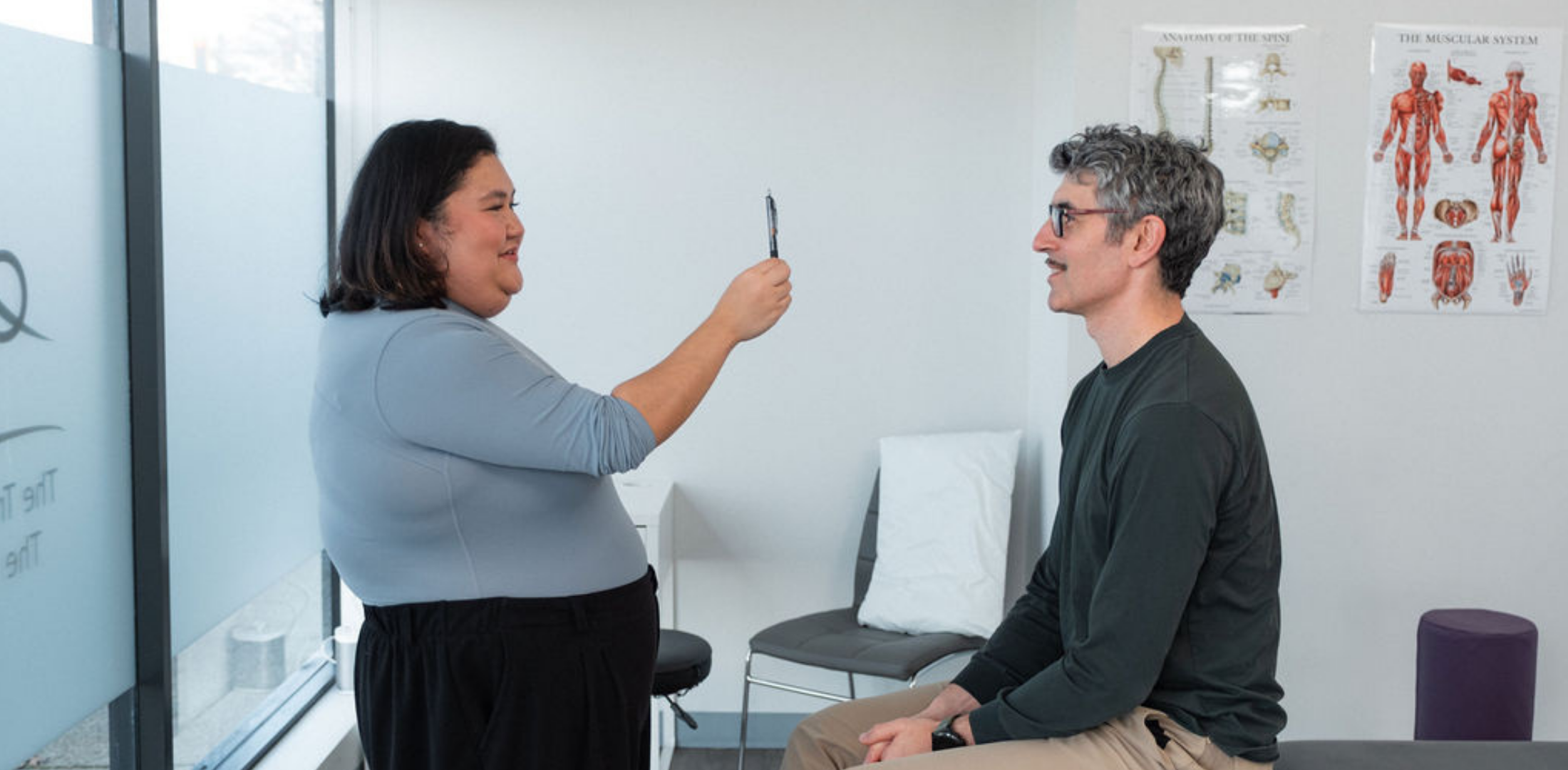
Your physiotherapist asks about the sensation, when it began, triggers, episode length, falls, hearing changes, headaches, recent illness, medication changes and relevant health history. The assessment also considers how dizziness affects daily activities and whether medical referral is needed.
Depending on your history and safety screening, testing may include eye movements, head movements, balance and walking. Dix-Hallpike and supine head roll tests help identify the canal involved when BPPV is suspected. Testing may briefly reproduce vertigo, so the physiotherapist explains the process and adapts it to your needs.
When Medical Assessment Is Needed
Persistent, changing or atypical symptoms should be reassessed. Seek emergency care for sudden dizziness with new weakness, difficulty speaking, severe headache, marked difficulty walking or other concerning neurological symptoms. Physiotherapy assessment does not exclude every medical cause of dizziness.
Frequently Asked Questions
The most common type of vertigo is BPPV; it is characterized by short-lasting spells of acute vertigo, which leaves the patient dizzy,nauseated and generally not well for most of the day. The most characteristic sign of BPPV is that vertigo brought up by positional change such as laying down or turning in bed.
If you’re experiencing dizziness, vertigo, or suspected BPPV, a trained vestibular physiotherapist can often be an excellent first step. Through a detailed history and specific clinical tests, they can assess your symptoms, identify common vestibular conditions such as BPPV, and determine an appropriate treatment plan.
Starting with a vestibular assessment can help you get answers and begin appropriate care without necessarily waiting for a medical appointment first. If your symptoms suggest that further medical assessment or investigation is needed, your physiotherapist will recommend the appropriate next step.
The most common treatment for posterior-canal BPPV is a canalith repositioning maneuver, such as the Epley maneuver. This is a hands-on technique designed to move displaced particles within the inner ear back to their appropriate position. It is generally well tolerated, although some brief dizziness or vertigo during the maneuver is expected.
BPPV can occur in different canals and patterns, and different types may require different repositioning techniques. **Canalith repositioning procedures are highly effective, with success rates reported as high as 95% or more in the clinical literature.**¹
The key to successful treatment is an accurate diagnosis, as the appropriate maneuver depends on which canal and type of BPPV is involved.
¹ Bhattacharyya N, Gubbels SP, Schwartz SR, et al. Clinical Practice Guideline: Benign Paroxysmal Positional Vertigo (Update). Otolaryngology–Head and Neck Surgery. 2017;156(3_suppl). doi:10.1177/0194599816689667.
If you are being assessed or treated for BPPV, we recommend arranging for someone to drive you to and from your appointment, particularly if you have significant dizziness or vertigo.
Some people may experience temporary nausea or dizziness during or shortly after a repositioning maneuver. If you have a history of severe nausea or vomiting with vertigo, speak with your doctor or healthcare provider before your appointment about whether any medication may be appropriate for you.
After a BPPV repositioning maneuver, you can generally return to your normal activities as tolerated. Routine restrictions such as avoiding certain head movements, sleeping upright, or avoiding the involved side are not generally recommended.
You may experience some temporary dizziness or imbalance following treatment. Your vestibular physiotherapist will provide individualized instructions based on your symptoms and response to treatment.
BPPV treatment is highly effective, but symptoms do not always resolve after a single treatment. Some types of BPPV can require more than one repositioning maneuver, and BPPV can occasionally recur after successful treatment.
If your symptoms do not improve with appropriate treatment, your vestibular physiotherapist can reassess your condition and determine whether further treatment or medical assessment is appropriate.
Recovery varies depending on the type and cause of your symptoms. Some people experience significant improvement after a single repositioning treatment, while others may need follow-up treatment or a course of vestibular rehabilitation. The number of appointments depends on your diagnosis, how you respond to treatment, whether symptoms recur, and any other contributing factors. Your vestibular physiotherapist can discuss your expected treatment plan and progress with you after your assessment.
Vestibular physiotherapy is available at Coast Therapy clinics across the Tri-Cities, Fraser Valley, and Vancouver. Because vestibular care is provided by physiotherapists with specific training and clinical experience, practitioner availability varies by location and schedule.
When booking, look for a Vestibular / Vertigo appointment or contact our team if you are unsure which appointment type to select. You can also review our practitioner profiles to find a physiotherapist with vestibular experience.